
Building Safety Regime
The Building Safety Regime has fundamentally changed how higher-risk building projects are designed, approved, constructed and managed. With the regime now firmly established, the focus for project teams has shifted from understanding the basic requirements to demonstrating compliance, preparing robust submissions and navigating the Building Safety Regulator (BSR) process effectively.
MyDek has created this hub to bring together the latest guidance, regulatory updates and practical insights to help project teams understand what the BSR expects and how this can be applied in practice.
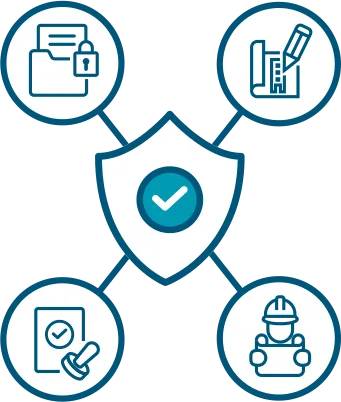
Do you need help understanding how these regulations apply to your upcoming projects?
Our team comprises seasoned experts who have navigated the complexities of Building Safety Act regulations.
How we can help

Technical
Guidance
Direct access to trained experts providing design support, regulatory guidance and technical calculations throughout your project.

Bespoke
Solutions
Standard and bespoke solutions tailored to your project, overcoming challenges while meeting regulatory and design requirements.
Desirable
Products
Non-combustible decking and support systems delivering aesthetic flexibility, proven performance and design freedom.

Cost
Neutrality
Harmonised pricing structures ensure the right product selection without compromising project budgets.

Complete
Confidence
Comprehensive technical information ensuring all stakeholders remain informed, aligned and fully satisfied.
Latest BSR Updates
BSR Becomes a Standalone Regulator
In January 2026, the Building Safety Regulator became a standalone organisation under the Ministry of Housing, Communities and Local Government. The move is part of the Government’s longer-term plan to establish a Single Construction Regulator.
For project teams, the immediate Gateway requirements remain, but the regulator is simultaneously changing the way it processes applications and working more closely with industry to improve approval times.
Latest Gateway 2 Figures
The latest BSR data, published on 6 October 2026 and covering July to September, shows that Gateway 2 approval rates remain high. However, determination times are still longer than the statutory periods for many projects, particularly external remediation.
The figures also show a sharp rise in applications ahead of the Building Safety Levy taking effect on 1 October. The BSR has introduced additional checks and states that applications with significant compliance gaps may be rejected where there is no realistic prospect of approval within a reasonable timeframe.
The key message for project teams remains the same: a construction-ready, coordinated submission is easier for the regulator to assess than a design that still contains unresolved technical decisions.
Remediation Toolkit
The BSR recently launched its Building Regulation Toolkit, a checklist which explains the information the BSR expects to see in project submissions and highlights common issues that can lead to requests for clarification or delays.
What the BSR is Telling Project Teams
- Design it before you submit it – BSR is explicitly warning against applications where elements remain at concept stage or are left for the contractor to resolve later.
- Explain compliance, don’t just upload evidence – A folder full of reports, calculations and certificates is not a compliance strategy. BSR says assessors should not have to piece together disconnected information themselves.
- Use project-specific evidence – Statements such as “negligible impact” or generic product evidence need to be supported by calculations or analysis relevant to the actual building.
- Coordinate the interfaces – Fire, façade, structure, drainage, thermal performance, guarding and fixings cannot be treated as separate packages.
- Plan how you will prove it was built correctly – Inspection points, verification, change control and handover information need to be considered before construction, not reconstructed at Gateway 3.

Gateway 1 – Planning
What you must do: Since August 2021, planning applications for higher‑risk buildings must include a Fire Statement. The Building Safety Regulator will review fire safety at this earliest stage, so make sure your balcony and cladding specification is clear and compliant.
How MyDek can help: Feel free to reach out to our team to help develop the fire strategy for your building – lean on our experience.

Articles
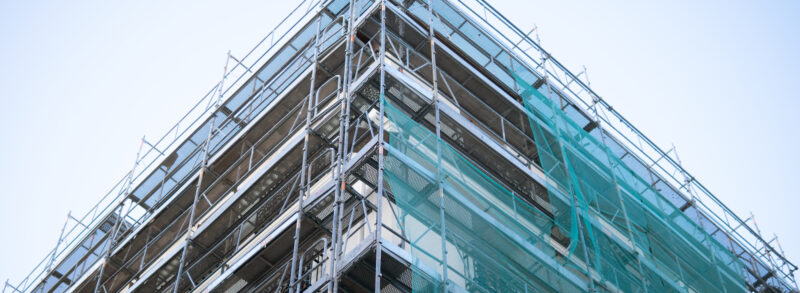
The Building Safety Act’s Gateway 1 and What it Means for the UK Construction Industry – Part One
Note: This blog was originally published on 29 September 2023. Some information, product features, pricing, or recommendations may have changed since publication. Please refer to our...
Read More
Your Guide to the Building Safety Act
Note: This blog was originally published on 26 January 2024. Some information, product features, pricing, or recommendations may have changed since publication. Please refer to our...
Read MoreFAQs
Gateway 1, known as the “Planning Gateway”, is the first of three checkpoints under the Building Safety Act. It ensures that fire safety is considered from the very beginning – before planning permission is granted. For balconies, terraces and cladding systems, the requirement is to demonstrate that the overall fire strategy has been thought through, that external wall design will mitigate fire spread, and that future detailed design will follow a safe and compliant path. No product approvals or material certificates are needed at this stage, but the principles must be sound. For further information, see the UK Government guidance on Building Safety Planning Gateway 1.
The core submission is a Fire Statement, which explains how the proposed development meets fire safety objectives, especially in relation to the external envelope. This should set out the design intent – such as the separation of balconies, control of vertical and horizontal fire spread, and general approach to materials – without committing to specific products. Supporting information can include concept fire strategies, outline drawings, and diagrams showing balcony interfaces and façade layouts. The Building Safety Regulator reviews these to confirm that fire safety has been properly embedded at the planning stage.
Gateway 1 applies to new higher – risk residential buildings and to major changes of use or extensions that fall under the Building Safety Act. However, refurbishment projects that significantly alter the external wall or add new balcony structures should still demonstrate a clear fire rationale, even if they do not trigger a formal Gateway 1 process. Planning authorities increasingly expect fire statements for such works. Guidance on this can be found via the Building Engineering Services Association.
PAS 9980:2022 provides a structured framework for Fire Risk Appraisal of External Walls (FRAEW). While its main application is in assessing existing buildings, its methodology helps shape early design thinking by identifying potential fire – spread pathways and mitigation options. Citing PAS 9980 in a Gateway 1 submission shows that the design team understands and intends to manage these risks from concept through to delivery. Details are available from BSI and UK Government technical guidance.
At this stage, Gateway 1 focuses on demonstrating intent rather than compliance. The fire statement should outline the principles by which the external wall and balcony systems will meet the functional requirements of Building Regulations Approved Document B. This includes concepts such as using non – combustible systems, providing fire breaks between balconies, avoiding continuous cavities, and ensuring adequate separation from glazing and escape routes. The specific products and test evidence supporting these principles are developed and submitted later at Gateway 2 and checked for completeness at Gateway 3.
Delays occur when fire statements treat the external envelope superficially – offering little explanation of how fire risk will be addressed. Missing or generic descriptions of balcony and cladding arrangements, or inconsistent references to the overall fire strategy, often prompt requests for further information. Another frequent issue is a lack of coordination between architects, façade designers and fire engineers. Early multidisciplinary alignment prevents rework and improves planning success.
Gateway 1 applies formally only to higher-risk residential buildings – those over 18 m or seven storeys with two or more dwellings (or 11 m or 5 storeys where the primary purpose of the building is residential). However, adopting the same structured approach to fire strategy and design intent is increasingly considered best practice even on lower – rise developments. It helps to avoid later compliance challenges and demonstrates proactive risk management.
MyDek supports clients through every stage of the building safety process. At Gateway 1, we help articulate your fire strategy for balcony and terrace systems, supplying technical notes and compliance statements aligned with current BSR expectations. At Gateway 2, we can provide full material specifications, test evidence and detailed drawings to support regulatory approval. Throughout, we assist with documentation management to maintain the golden thread. Engaging MyDek early ensures a smooth and defensible path through the Gateway process. Contact our experts for this support.
Gateway 2 – Technical Design and Construction
What you must do: Gateway 2 is the critical approval before any work begins; you’ll need a complete design pack, including competence evidence, a construction control plan and a change‑control strategy. No work can start until approval is granted.
How MyDek can support: We provide wind‑uplift and structural calculations, detailed balcony interface drawings and site training. Explore our Aspira or Luxura boards for premium terrace designs.

Articles
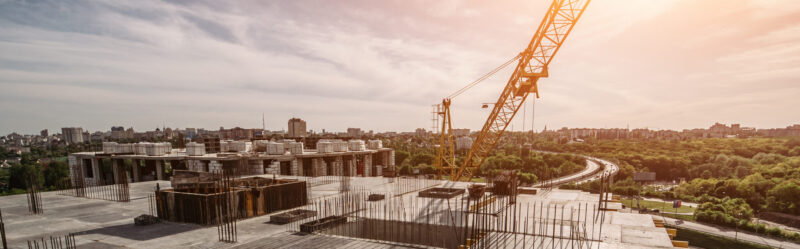
Navigating Gateway 2 of the Building Safety Act
Note: This blog was originally published on 17 December 2024. Some information, product features, pricing, or recommendations may have changed since publication. Please refer to our...
Read More
Gateway 2 Approval: What You Need for a Successful Application
Note: This blog was originally published on 26 July 2024. Some information, product features, pricing, or recommendations may have changed since publication. Please refer to our...
Read MoreFAQs
Gateway 2 is the pre-construction approval stage under the Building Safety Act. It applies to higher-risk residential buildings and replaces the previous “deposit of full plans” under Building Control. No building work may begin until the Building Safety Regulator (BSR) has approved the full, detailed design. At this point, every aspect of the external wall, cladding, balcony and terrace system must be fully designed, specified, and evidenced as compliant with the Building Regulations.
The BSR expects complete technical evidence packages covering the entire external envelope. This typically includes:
- A detailed fire strategy, incorporating balcony and façade interfaces, cavity barriers, and separation from escape routes.
- Detailed evidence of the competence of the designers working on the project, including subcontractors.
- Construction drawings at a resolution that allows for installation oversight – often full GA, section and junction details.
- Product specifications, including Declaration of Performance, classification reports (EN 13501-1/A2 s1 d0 or A1 where applicable), and third-party test certificates. Structural stability is just as important as fire safety, both need to be fully evidenced.
- Installation method statements and fixings data.
- Compliance matrices showing how each regulation is satisfied.
All documents form part of the “golden thread” that continues into Gateway 3.
Yes, but only under controlled change management. Any substitution that affects compliance – such as altering material, fixing method or junction detail – must be formally reassessed, recorded, and approved before installation. Uncontrolled substitution is one of the most common causes of delay at Gateway 3. MyDek assists project teams in assessing equivalent performance and preparing change-control documentation to maintain compliance continuity.
Change is inevitable in a project to a greater or lesser degree and at any point in the design, build or occupation stages, and management of the changes is crucial. When a change is required, the Principal Designer must make a final decision on how to handle this in one of three ways:
- A major change where the structural and/or fire strategy of the building is impacted in some way. In this instance, the Regulator must be informed immediately, and no work is allowed to continue until approval for the change has been issued.
- A minor change where the structural and/or fire strategy is not impacted directly, for instance, a like-for-like replacement of a product, or a superior product substitution. In this instance, the Regulator must be informed, but work can continue. Proof will be needed at Gateway 3 that the change has been adequately managed.
- A trivial change such as an alternative colour or finish. This is a recordable change. The Regulator does not need to be immediately informed, but a record must be kept of the change and must be submitted as part of the Gateway 3 application.
In all cases, what is installed on the building must be fully reflected in the Golden Thread of information.
Comprehensive evidence is essential. For cladding and balcony systems this may include EN 13501-1 classifications for combustibility, CWCT test data for weather performance, mechanical testing to EN 1990/1993 design standards, and corrosion or durability data to BS EN ISO 9223 or similar. All test reports must relate to the same configuration and materials proposed for use on the project. The BSR will reject evidence that is outdated, incomplete, or not representative.
Gateway 2 marks the point where the golden thread becomes an operational document set. Every drawing, test certificate and calculation must be indexed and traceable. This information will form the baseline for construction verification at Gateway 3. Managing version control, file naming, and approval status at this stage prevents non-conformances later. MyDek can help maintain structured data packages for external envelope systems.
Typical issues include incomplete design information, mismatched fire test evidence, missing third-party certifications, or poor coordination between trades. Another frequent cause is lack of clarity about load paths or fixings between balcony systems and the façade structure. Early engagement with specialist suppliers, clear definition of responsibilities, and well-organised documentation are the best defences against delay.
MyDek provides complete system documentation – technical drawings, test data, structural calculations, and declarations – to support Gateway 2 submissions. Our design team helps project engineers and fire consultants prepare compliant interface details, coordinate decking layouts, and evidence A-class performance. We also support controlled substitutions and data management to maintain the golden thread, ensuring that the project moves efficiently towards Gateway 3 approval.
Gateway 3 – The Final Certificate
What you must do: Gateway 3 is the point of completion; the Principal Accountable Person must submit the as‑built Golden Thread, mandatory reporting records and a final compliance statement. Only after the Building Safety Regulator issues the completion certificate can the building be occupied.
How we can support: We produce operation and maintenance manuals, confirm that the installed decking matches your specification and help collate inspection evidence.

Articles
Navigating Gateway 3 of the Building Safety Act
Note: This blog was originally published on 22 November 2023. Some information, product features, pricing, or recommendations may have changed since publication. Please refer to our...
Read MoreFAQs
Gateway 3 is the final approval stage under the Building Safety Act. It takes place once construction is complete but before residents occupy the building. At this point, the Building Safety Regulator (BSR) must be satisfied that the building has been constructed exactly as approved at Gateway 2 along with any approved changes, and that all safety-critical systems – including the external wall, balconies and terraces – are fully compliant and evidenced. Occupation must not take place until the BSR issues a completion certificate.
The submission must prove that the as-built condition matches the approved design and that all fire-safety measures perform as intended. Required evidence typically includes:
- As-built drawings for façades, balconies and terraces, with revision control.
- Photographic verification of key installations, such as cavity barriers, fixings, and junctions.
- Manufacturer’s installation certificates and test reports confirming product conformity.
- Inspection and commissioning records from competent persons.
- A completed “as-built” Fire and Emergency File forming part of the golden thread.
- Updated compliance matrices cross-referencing evidence against Gateway 2 approvals.
The regulator examines the as-built systems to ensure they align with the approved drawings, specifications, and fire strategy. This includes checking that materials and fixings match the declared products, cavity barriers are installed correctly, and there are no breaches of compartmentation. On-site inspections and intrusive checks may be undertaken where photographic or documentary evidence is insufficient.
Typical causes include undocumented substitutions, missing installation photographs, incomplete sign-off from subcontractors, or discrepancies between design and as-built records. Inconsistent numbering or poor version control across drawings also creates confusion and can result in rework. Another frequent issue is discovering that products have been swapped without equivalent fire performance evidence – something the BSR treats as a major non-compliance.
All changes must be recorded through the formal change-control process. If a deviation affects compliance, a design change application must be made and approved by the BSR before the Gateway 3 submission can proceed. Failure to disclose changes can result in refusal of completion or enforcement action. Early documentation and supplier engagement are key to resolving such differences quickly.
It means that all safety-critical elements – including façades, balconies, terraces, fire doors, smoke control, and emergency systems – are complete, tested, and evidenced. The client or accountable person must be able to demonstrate that residents will occupy a fully safe environment, supported by maintained and verifiable records. Gateway 3 approval cannot be conditional; all relevant work must be finished.
After Gateway 3 approval, the BSR issues a completion certificate. The dutyholder responsibilities then transition to the Accountable Person(s) for the occupation phase. They are responsible for maintaining the golden thread, managing safety cases, and ensuring ongoing compliance with Building Safety and Fire Safety Orders. Any post-completion changes to balconies, terraces, or external walls must be risk-assessed and recorded as part of that ongoing management duty.
MyDek provides post-installation verification and documentation support for balcony and terrace systems. This includes site inspection records, photographic logs, installer certification, and performance documentation aligned with Gateway 2 approvals. We help project teams compile structured golden-thread packages for submission to the BSR, closing out outstanding queries efficiently and ensuring a defensible compliance position for handover.
The Golden Thread
What it is: A digital record that holds all relevant information proving the building complies with regulations throughout construction and includes details to manage and mitigate safety risks in future.
How we can support: We provide product certificates, installation guides and maintenance data in Golden Thread‑ready formats.

Articles

The Golden Thread and Building Safety
Note: This blog was originally published on 12 September 2021. Some information, product features, pricing, or recommendations may have changed since publication. Please refer to our...
Read MoreFAQs
The Golden Thread is the structured, digital record of all information that relates to a building’s safety throughout its entire life – from early design through construction and into occupation. It captures every key decision, change, approval, and piece of evidence that affects the building’s safety performance. The concept was introduced through the Building Safety Act 2022 and was one of the core recommendations from Dame Judith Hackitt’s Building a Safer Future report.
It provides transparency and accountability. Before the Act, safety information was often fragmented or lost between project stages. The Golden Thread ensures that every party – designers, contractors, regulators, and future building managers – has access to consistent, verified information showing how and why design decisions were made. It allows future investigations, refurbishments, and safety reviews to be based on fact rather than assumption. As well as ensuring safety for residents, this also provides cost savings through the lifetime of the building, as any maintenance and upgrades can be based on verified information, meaning no need for costly invasive surveys or over-specifying due to incomplete existing design data.
The Golden Thread begins at Gateway 1, where the overall fire and structural safety strategy is first set out, and continues through Gateway 2 (detailed design and construction approval) and Gateway 3 (as-built verification and handover). Once the building is occupied, the record passes to the Accountable Person, who must maintain it for the life of the building. It never truly ends – it evolves as the building is modified, maintained, and eventually refurbished or demolished.
The Golden Thread must contain all safety-critical information necessary to understand the building’s design, construction, operation and maintenance. This typically includes:
- Fire strategy, structure, and services design reports.
- Product specifications, test data, and declarations of performance.
- Drawings and models, including revisions and change records.
- Construction inspection evidence and installation certificates.
- Maintenance schedules, fire door and façade inspection data.
- Records of any design changes, substitutions, or safety incidents.
The key requirement is that the information is accurate, accessible, up-to-date, and securely stored.
During design and construction, the Principal Designer and Principal Contractor are responsible for creating and maintaining the record. On completion, it transfers to the Accountable Person (or Principal Accountable Person if there are several), who must maintain, update, and make it available to the Building Safety Regulator upon request. Everyone involved – consultants, suppliers, and installers – contributes data to the thread as part of their duty.
Failure to keep an accurate Golden Thread is a breach of duty under the Building Safety Act. The Building Safety Regulator can issue Improvement Notices, Stop Notices, or pursue criminal prosecution for serious or repeated failures. Inadequate record-keeping can also lead to refusal of Gateway 3 completion approval, preventing occupation. Beyond compliance, it exposes owners and dutyholders to liability if safety issues arise later without supporting evidence.
- Establish a digital information management system early in design.
- Define clear roles and responsibilities for data entry and approval.
- Capture every design and material decision, even minor ones.
- Maintain consistent file naming, version control, and metadata.
- Verify that all suppliers can provide compliant digital evidence.
By embedding these practices early, teams can build a compliant Golden Thread naturally rather than trying to reconstruct it later.
Building Safety Act Courses
The last few years have been significant for the construction industry. There have been some important changes, due to the implementation of the Building Safety Act. To help you and your team understand the requirements of the Building Safety Act, our team has designed courses to aid you in successfully navigating the gateways.
Balconies and terraces are now one of the most frequently challenged elements at Gateway 2. BSR reviewers repeatedly request extra evidence on fire classification, drainage strategy, cavity treatment, uplift resistance and load paths.
Many of these challenges arise from early design decisions, long before a specialist is appointed. Getting this package right upfront removes a major source of delay and rework.

By the end of the CPD you will know:
- The actual fire-compliance requirements for balcony systems: A1/A2 evidence, component restrictions and the documentation the BSR now expects.
- Wind uplift: a surprising fact about wind uplift that is frequently misunderstood.
- Wind uplift design: why this is being queried more often, what triggers non-compliance, and simple ways to design out the risk.
- Drainage and falls under BS8579: what is mandatory, what is misunderstood, and why poor detailing stalls approvals.
- Structural considerations that commonly get missed: fixings, load paths, tolerances and secondary framing.
- How to assemble a balcony/terrace package that clears Gateway 2 without supplementary queries.
To keep up to date with the latest industry news and our products – Sign up for our newsletter
Our newsletters are packed with valuable industry insights around Building Fire Safety, non-combustible balcony decking facts, product developments and other essential industry topics. Make sure you keep up to speed with what's going on by signing up!