
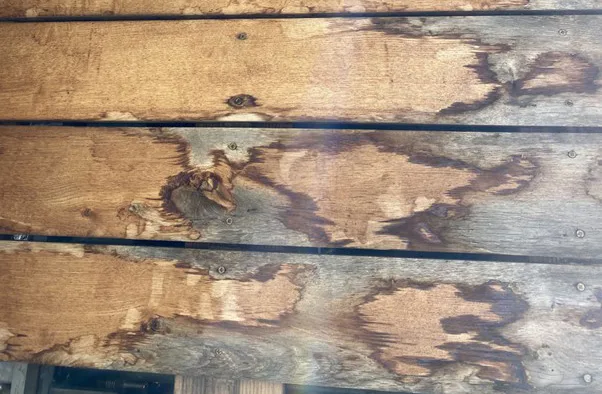
Decking is a popular feature in UK balconies, terraces, gardens and outdoor spaces, enhancing aesthetic appeal, usability and property value. Timber has traditionally been the material of choice due to its natural appearance and versatility. However, the lifespan of timber decking, together with its maintenance demands and fire performance, has led to increased interest in non-combustible alternatives, particularly for balconies and terraces.
This article explores the lifespan of timber decking, the challenges associated with its use, and the potential benefits of non-combustible decking materials in the context of the UK’s climate and evolving regulatory environment.
Lifespan of Timber Decking
The lifespan of timber decking is influenced by several factors, including timber species, environmental exposure, maintenance regime and installation quality.
Types of timber and durability
Softwood decking
Commonly manufactured from pine, spruce or fir, softwood decking is widely used due to its affordability and availability. Even when pressure treated, softwood decking typically has a service life of around 10–15 years, assuming regular maintenance. While treatment improves resistance to rot and insect attack, it does not eliminate weathering or long-term degradation.Hardwood decking
Hardwood species such as oak, teak and iroko are denser and more resistant to wear. Depending on species and care, hardwood decking may last 25–50 years. Higher cost, specialist maintenance requirements and sustainability considerations can, however, limit its suitability for some projects.
Environmental factors
The UK’s temperate maritime climate presents challenges for timber decking. Prolonged exposure to moisture can result in rot, warping and splitting. In areas of high rainfall or coastal exposure, increased humidity and airborne salts can further accelerate deterioration.
Maintenance requirements
Regular maintenance is essential to prolong the life of timber decking. This typically includes cleaning, sealing and periodic treatment to protect against moisture ingress, UV exposure and fungal growth. Even with diligent maintenance, timber will degrade over time. The cost and effort associated with ongoing maintenance can be a significant drawback where low-maintenance solutions are preferred.
Installation quality
Installation quality has a significant impact on longevity. Poor detailing, insufficient ventilation, inadequate drainage or inappropriate fixings can accelerate deterioration. For example, timber decking installed close to poorly drained interfaces, such as balcony edges adjacent to the building, may retain moisture and degrade more rapidly.
Coverings such as carpet or artificial grass can inhibit drying after rainfall, reducing service life. These coverings may also introduce additional fire risk, particularly where combustible materials or discarded smoking materials are present.
Challenges of Timber Decking in the UK
Fire performance
Timber decking is combustible and can contribute to fire spread, particularly when dry or when combustible materials accumulate on the surface. As fire safety requirements have evolved, the use of combustible materials on balconies and within external wall systems has come under increased scrutiny, especially in higher-risk residential buildings.
Environmental considerations
The environmental impact of timber decking varies by source and species. Some hardwoods are associated with deforestation and biodiversity loss if not responsibly sourced. While softwoods are generally more sustainable, their shorter lifespan may result in more frequent replacement, potentially offsetting some environmental benefits.
Cost implications
Although timber decking may have a lower initial cost than some alternatives, long-term costs associated with maintenance, repair and replacement can be significant. In some circumstances, regulatory or risk-based assessments may also limit the suitability of combustible decking materials.
Benefits of Non-Combustible Decking
In response to the limitations of timber, non-combustible decking materials such as aluminium, steel and certain mineral-based systems have become more widely used, particularly on balconies and terraces.
Fire safety
Non-combustible decking materials can significantly reduce the contribution of balcony elements to external fire spread. In higher-risk buildings, materials achieving A1 or A2-s1,d0 classification to EN 13501-1 are often required. There are no treatments that enable timber or plastic-based decking products to achieve these classifications. The suitability of materials in existing buildings is typically assessed through a Fire Risk Appraisal of External Walls (FRAEW), which considers the external wall system as a whole and may inform decisions on remediation or risk mitigation.
Longevity and durability
Non-combustible decking systems generally offer greater durability than timber. Aluminium and steel decking systems, when appropriately coated and detailed for corrosion resistance, can achieve long service lives with minimal degradation.
Certain mineral-based decking systems are inherently non-combustible and do not rely on surface treatments to achieve fire performance. When properly installed and maintained, non-combustible decking systems may have service lives extending several decades, particularly in exposed environments.
Low maintenance
Non-combustible decking typically requires minimal maintenance compared to timber. Regular sealing, staining or preservative treatment is not required, and cleaning is usually limited to routine washing to remove debris. This can significantly reduce long-term maintenance costs.
Environmental considerations
Some non-combustible decking systems incorporate recycled materials or are fully recyclable at end of life. Their extended service life can also reduce material consumption over time. Where sustainability is a priority, the availability of an Environmental Product Declaration (EPD) can provide additional assurance regarding environmental performance.
Aesthetic and design flexibility
Modern non-combustible decking materials are available in a wide range of colours, textures and finishes, allowing designers to achieve a variety of visual outcomes without compromising fire performance or durability. Advances in manufacturing have enabled finishes that reflect traditional timber aesthetics while offering improved performance characteristics.
Conclusion
Timber decking remains a familiar and visually appealing option, but its limitations in terms of lifespan, maintenance demands and fire performance are leading many building owners and designers to consider non-combustible alternatives. Non-combustible decking materials can offer advantages in fire safety, durability and long-term value, particularly in the context of modern fire safety expectations and the UK’s challenging climate. As regulatory guidance and risk-based assessment approaches continue to evolve, non-combustible decking is likely to play an increasingly important role in balcony and terrace design.