
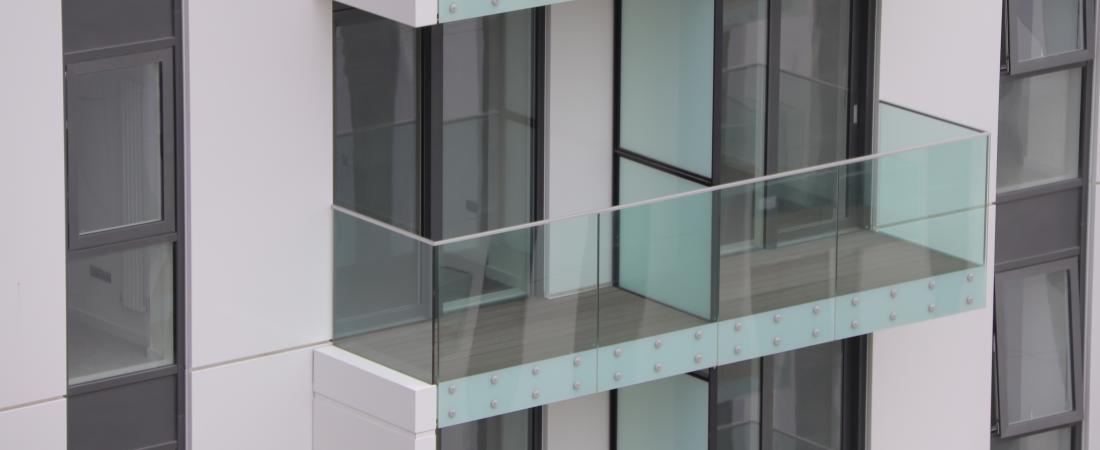
This is a guide to non-combustible balcony decking options. In recent years the number of balcony fires across the UK has increased significantly. One of the main causes for these fires has been carelessly discarded cigarettes that have sparked the fire and resulted in extensive damage to property and possessions. In an attempt to secure buildings and residents from such external fires, the government introduced new fire-safety regulations for external walls. According to these new regulations, external wall systems of all residential buildings over the height of 18 m need to be built with non-combustible materials, including balconies. In this way, fires do not get the chance to spread to the rest of the building via the external walls. One of the main aspects that needs to be checked to secure your balcony from such an accident is the decking used. Switching to non-combustible decking does not just keep you safe from balcony fires, it also ensures compliance with the latest fire-safety regulations.
Insights, Industry News
Balcony Decking Options – An Architect’s Guide
06
Jan
Jan
Note: This blog was originally published on 6 January 2021. Some information, product features, pricing, or recommendations may have changed since publication. Please refer to our latest resources or contact us for the most current information.
This is a guide to non-combustible balcony decking options. In recent years the number of balcony fires across the UK has increased significantly. One of the main causes for these fires has been carelessly discarded cigarettes that have sparked the fire and resulted in extensive damage to property and possessions. In an attempt to secure buildings and residents from such external fires, the government introduced new fire-safety regulations for external walls. According to these new regulations, external wall systems of all residential buildings over the height of 18 m need to be built with non-combustible materials, including balconies. In this way, fires do not get the chance to spread to the rest of the building via the external walls. One of the main aspects that needs to be checked to secure your balcony from such an accident is the decking used. Switching to non-combustible decking does not just keep you safe from balcony fires, it also ensures compliance with the latest fire-safety regulations.
This is a guide to non-combustible balcony decking options. In recent years the number of balcony fires across the UK has increased significantly. One of the main causes for these fires has been carelessly discarded cigarettes that have sparked the fire and resulted in extensive damage to property and possessions. In an attempt to secure buildings and residents from such external fires, the government introduced new fire-safety regulations for external walls. According to these new regulations, external wall systems of all residential buildings over the height of 18 m need to be built with non-combustible materials, including balconies. In this way, fires do not get the chance to spread to the rest of the building via the external walls. One of the main aspects that needs to be checked to secure your balcony from such an accident is the decking used. Switching to non-combustible decking does not just keep you safe from balcony fires, it also ensures compliance with the latest fire-safety regulations.