
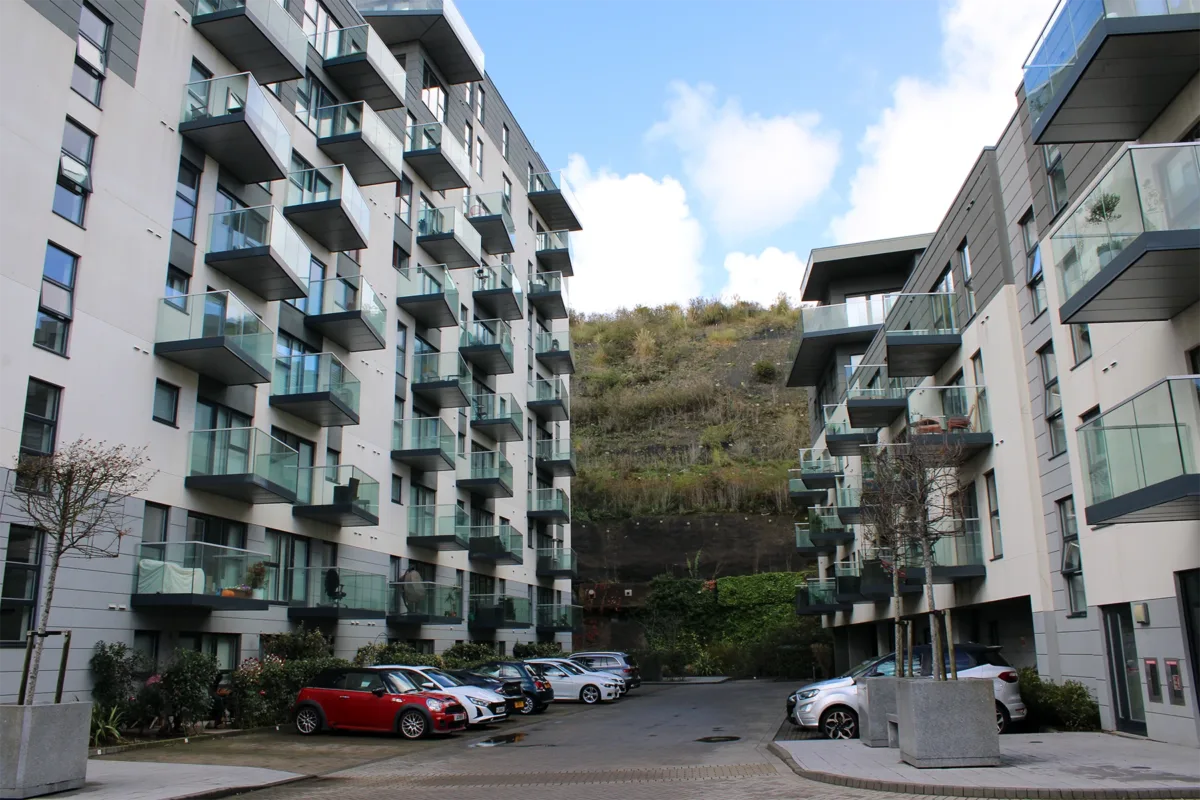
In residential construction, external features such as decking are often specified in the latter stage of the build process, once the primary structure is ready. Usually, decking is seen as an external system that affects fire strategy, drainage, thresholds, and load paths.
Project experience across residential developments shows that late decking decisions can introduce risks that can be avoided with earlier specification. Issues such as approval delays, late-stage redesign, coordination challenges, unexpected costs, and other trade-related issues become prevalent in such cases.
Specifying decking earlier in the project life cycle helps reduce these risks and supports expedited delivery.
What are the risks attached to late decking?
When decking is specified late, projects are more exposed to supply and programme uncertainties such as:
- Material Availability: It can become a challenge, particularly for systems with specific performance requirements or colour and profile consistency. This can lead to substitutions that may not align with the original design intent.
- Cost Control: Without early procurement planning, projects may face higher prices, limited options, or accelerated delivery charges.
- Interrupted Construction Sequencing: From a construction perspective, decking interfaces with several other elements, including waterproofing, drainage, thresholds, and balustrades, which are installed in a sequential manner. Late changes can disrupt sequencing and increase the likelihood of rework on-site.
What are the benefits of early decking specification?
Early specification allows decking to be included as a key part of the holistic built approach rather than a stand-alone aspect. Broadly, it covers the following points:
- Better integration into project timelines
- Improved coordination with structural requirements
- Clearer installation timelines and specified trades
- Enhanced cost visibility
This approach supports more predictable project outcomes and reduces the need for reactive decision-making later on.
Safety and Compliance Considerations
Decking plays a functional role in residential safety, particularly in external areas such as balconies, terraces, and communal spaces.
During early specification, decking systems can be coordinated with edge protection and balustrade strategies to support fall protection requirements and integrate fire-resistant materials, while ensuring compliance with increasingly stringent regulatory requirements at the design stage. This includes confirming slip resistance, load performance, and fire classification in line with current expectations.
As we move forward, compliance requirements focus on demonstrating that the installed systems match the tested systems. Allowing sufficient time for such evidence to be reviewed reduces pressure later in the approval stages.
Cost and Efficiency
Early decking decisions also bring in better cost control. Planned procurement reduces the chance of price volatility, removing the need for rushed or expedited orders. Moreover, quantities can be confirmed earlier, enabling bulk orders and reducing expenses associated with last-minute rework.
Installation is also more efficient when systems are fully detailed in advance. Clear layouts, fixing methods, and interfaces reduce on-site uncertainty and help installers work within the wider programme without delays or clashes. Over the life of a project, these efficiencies contribute to a smoother delivery process.
How MyDek Aligns with Early Specification Requirements
MyDek provides comprehensive assistance from the early design stage, including technical guidance on fire safety, wind uplift, structural calculations, and compliance documentation in accordance with the development’s needs. This early involvement ensures that more complete system evidence can be assembled ahead of Gateway 2 submissions, de-risking projects by minimising rework and delays.
Our non-combustible decking system components achieve A1 or A2-s1,d0 fire ratings, rigorously tested to meet building safety regulations.
Furthermore, availability of certification documents for our decking systems can provide support in demonstrating alignment through tested performance, reducing the possibilities of redesigns during the approval processes at Gateways.
Installation Certainty and Support
Early specification also supports smoother installation. When decking systems are fully detailed in advance, installers can work with clear layouts and fixing methods that align with the wider construction sequence. This reduces on-site decision-making and helps avoid clashes with adjacent trades.
It also supports better material planning, reducing the possibility of installation disruption caused by late deliveries or substitutions.
Practical Implementation Steps
MyDek simplifies the decking specification process for architects, builders and developers. Some of these steps include:
- Treating the decking as integral to the superstructure
- Establishing performance and compliance requirements from the outset
- Engaging the suppliers during the early design stage
- Finalising decking systems early on to reduce substitution risks
If you’re a construction professional with residential projects looking to reduce uncertainty and improve coordination with early decking solutions, engaging with MyDek and including decking as a design decision is a practical step in de-risking delivery.