
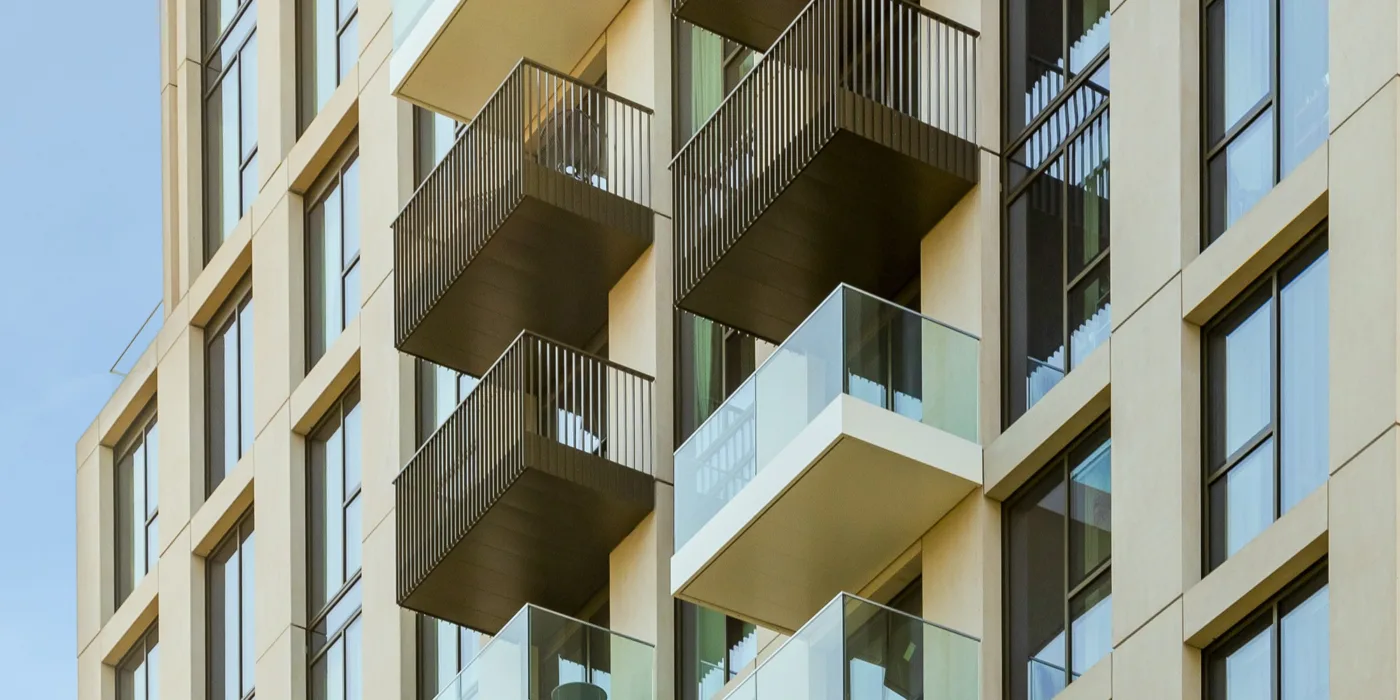
Balcony design decisions that seem minor at concept stage can quickly become major project risks. Since the introduction of the Building Safety Act 2022, balcony decking materials are under increasing scrutiny, particularly in relation to fire performance and combustibility. Specification owners must now demonstrate clearer decisions around materials, compliance evidence and accountability throughout a project’s lifecycle.
If questions around fire performance, material classification and installation are addressed too late, they can lead to compliance challenges, delays and disputes during construction. By asking the right questions early, design teams can reduce risk and avoid costly redesigns.
Here are five early questions that can help prevent balcony design disputes and support the specification of non-combustible decking systems.
Question 1: What Fire Performance Is Required for the Balcony Decking System?
The first and most critical question relates to fire performance.
Under guidance such as Building Regulations Approved Document B, certain external wall components on higher-risk buildings must meet strict combustibility classifications. While the classification of balconies can vary depending on design and interpretation, many project teams now adopt a risk-averse approach by specifying A1 fire rated decking materials.
This is where confusion can arise. For example, some decking products marketed as fire rated composite decking may achieve improved fire performance compared with traditional timber options, but they may not reach the A1 non-combustible decking classification required in certain design strategies.
Key takeaway:
Clarifying the required fire classification early allows the design team to determine whether materials are appropriate before specifications are locked in.
Question 2: Is the Decking Being Treated as Part of the External Wall System?
Another common source of disagreement is how the balcony itself is classified within the building envelope.
In many cases, balconies are considered part of the external wall system (as opposed to an external structure), meaning the materials used within the balcony build-up may fall under stricter combustibility requirements.
This distinction matters because it can significantly limit acceptable materials. Products may initially appear suitable, but if the balcony is treated as part of the external wall zone, the design team may instead require A1 fire rated systems.
Where uncertainty exists, it is often safer to specify A1 rated non-combustible materials such as MyDek’s Luxura mineral composite deck board, particularly on higher-risk residential buildings.
In particular, specifiers may favour solutions that offer:
- An A1 fire rated classification
- Long-term durability
- Compatibility with many balcony structures
Key takeaway:
Clarifying how the balcony will be assessed during compliance reviews helps avoid late-stage specification changes.
Question 3: How Will Wind Uplift, Drainage and Ventilation Be Managed Beneath the Decking?
While fire performance often dominates the conversation, balcony durability and safety also depend on proper drainage, ventilation, and resistance to wind forces.
Poor detailing beneath the balcony decking can lead to standing water, corrosion, structural deterioration, and even wind uplift issues, particularly on higher-rise buildings.
When specifying deck systems, designers should consider:
- Drainage routes and fall to prevent water pooling
- Ventilation gaps beneath the decking surface to allow airflow and reduce moisture build-up
- Fixing and anchoring systems that prevent wind uplift, especially on taller buildings
- Integration with waterproofing layers and the structural balcony frame
By addressing these factors early, specification owners can ensure the chosen decking system performs safely and reliably, while reducing maintenance challenges and long-term disputes.
Key takeaway:
Early coordination between the balcony structure, waterproofing layer and balcony decking system helps prevent performance issues and future maintenance disputes.
Question 4: Who Is Responsible for Compliance Evidence?
The regulatory environment has also changed the way responsibility is distributed across project teams.
Under the Building Safety Act 2022, duty holders must maintain a clear record of safety information throughout the design and construction process. This is referred to as the “golden thread” of building safety information.
For balcony design, this means the duty holder must keep clear evidence supporting the fire classification and performance of the chosen systems.
Questions specification owners should ask include:
- Is the product tested to the required Euroclass rating?
- Does the system provide verified A1 fire rated certification?
- Are supporting documents available for building control or regulator review?
- Is the evidence based on system testing rather than individual components?
Key takeaway:
The duty holder should ensure compliance evidence for systems is clearly established before specification sign-off.
Question 5: How Will the Decking System Be Installed and Maintained?
Installation details are another frequent cause of balcony disputes.
A decking system that appears suitable at design stage may create complications during construction if installation requirements have not been considered carefully.
Specifiers should review:
- Fixing methods
- Compatibility with the balcony substructure
- Expansion allowances for temperature changes
- Accessibility for inspection or maintenance
Modern decking systems are often designed with modular or removable profiles, making it easier to access waterproofing layers or services beneath the deck.
Maintenance is another key factor. While traditional timber or composite decking may require periodic replacement, some non-combustible systems such as our Luxura and aluminium deck boards provide significantly longer service lives with minimal maintenance.
Key takeaway:
Understanding installation methodology early helps ensure the selected balcony decking system performs as expected throughout the building’s lifecycle.
Why Early Decisions Matter
Balconies may appear to be a relatively small component of a building, but they sit at the intersection of fire safety, structural design, weather exposure and long-term maintenance.
In today’s regulatory environment, unresolved questions about balcony decking materials can delay approvals, trigger late design changes and introduce unnecessary project risk.
By asking the five questions outlined above, specification owners can:
- Reduce compliance uncertainty
- Avoid late-stage specification changes
- Minimise disputes between stakeholders
- Ensure the selected decking system meets fire performance requirements
For many projects, this process ultimately leads to the adoption of A1 fire rated balcony decking which provides clear compliance pathways and long-term durability.
Balcony Decking Early Design Checklist
When developing balcony specifications, design teams should confirm:
- The required fire classification for balcony decking
- Whether the balcony is treated as part of the external wall system
- Drainage and ventilation strategies beneath the decking
- Responsibility for providing compliance evidence
- Installation and maintenance requirements for the decking system
Addressing these questions early allows architects and specification owners to move forward with confidence – ensuring the chosen balcony decking solution is safe, compliant and suitable for the life of the building.
If you’re looking for a compliant and durable solution, explore our range of fire rated balcony decking systems designed to support safe, long-lasting balcony design.