
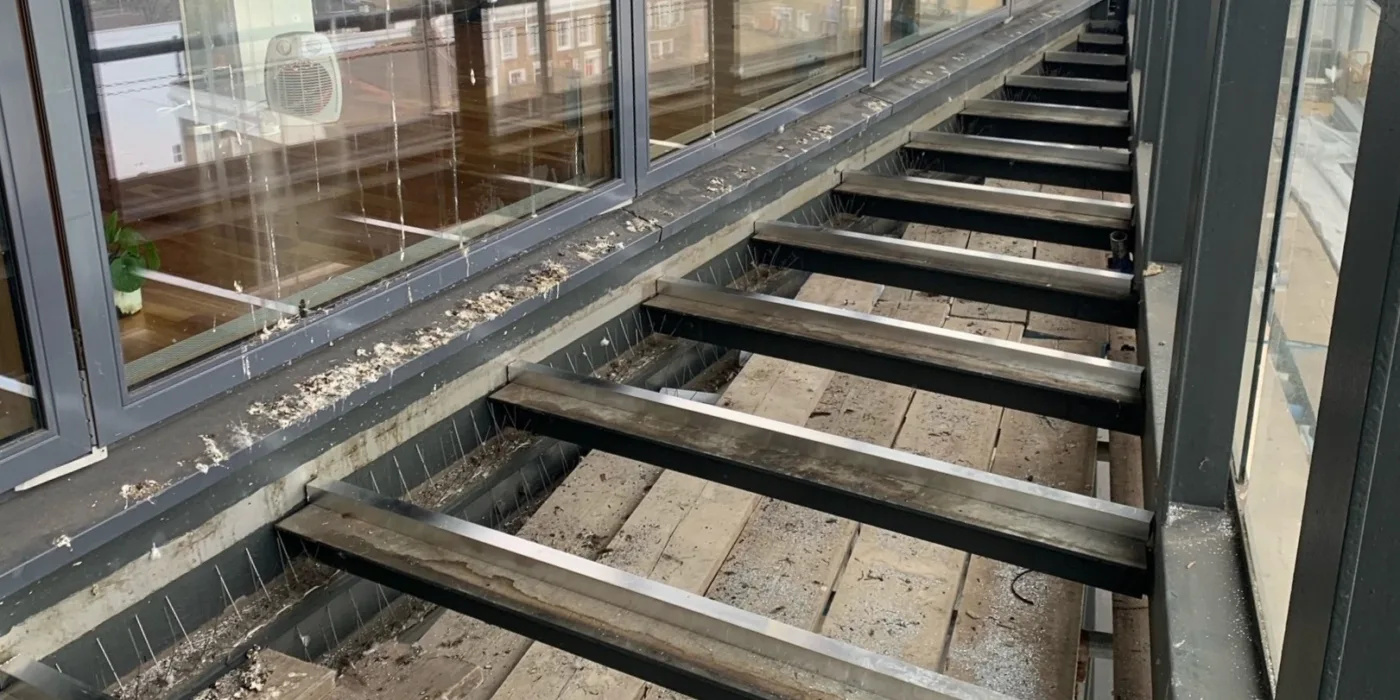
Across the UK, steel balcony refurbishment has become a priority for developers, housing providers and asset managers. Often driven by fire safety concerns and changing compliance requirements, replacing a balcony surface is rarely as simple as lifting one product out and installing another.
Every refurbishment project comes with existing constraints. Steelwork has already been fabricated, thresholds are fixed, drainage routes are established and structural loading may have changed since the building was first designed.
That’s why successful balcony refurbishment isn’t just about specifying a non-combustible decking board, it’s about designing a complete system that works with the existing structure while meeting today’s regulatory requirements.
Here are six of the most important questions every design team should ask before work begins.
1. Can the Finished Floor Level Change?
One of the first considerations during any refurbishment is whether the finished floor level (FFL) can be altered.
In many refurbishment projects, increasing or reducing the deck height opens up additional options for replacement systems. However, changing the floor level also affects several critical aspects of the design, including:
- Door thresholds
- Drainage performance
- Balustrade heights
- Accessibility
Raise the deck too far and you may reduce the height of the guarding below the required 1100mm. Raise it above the threshold and surface water may be directed back into the building over the threshold.
This is why refurbishment should always begin with a careful assessment of the existing build-up before selecting a replacement system.
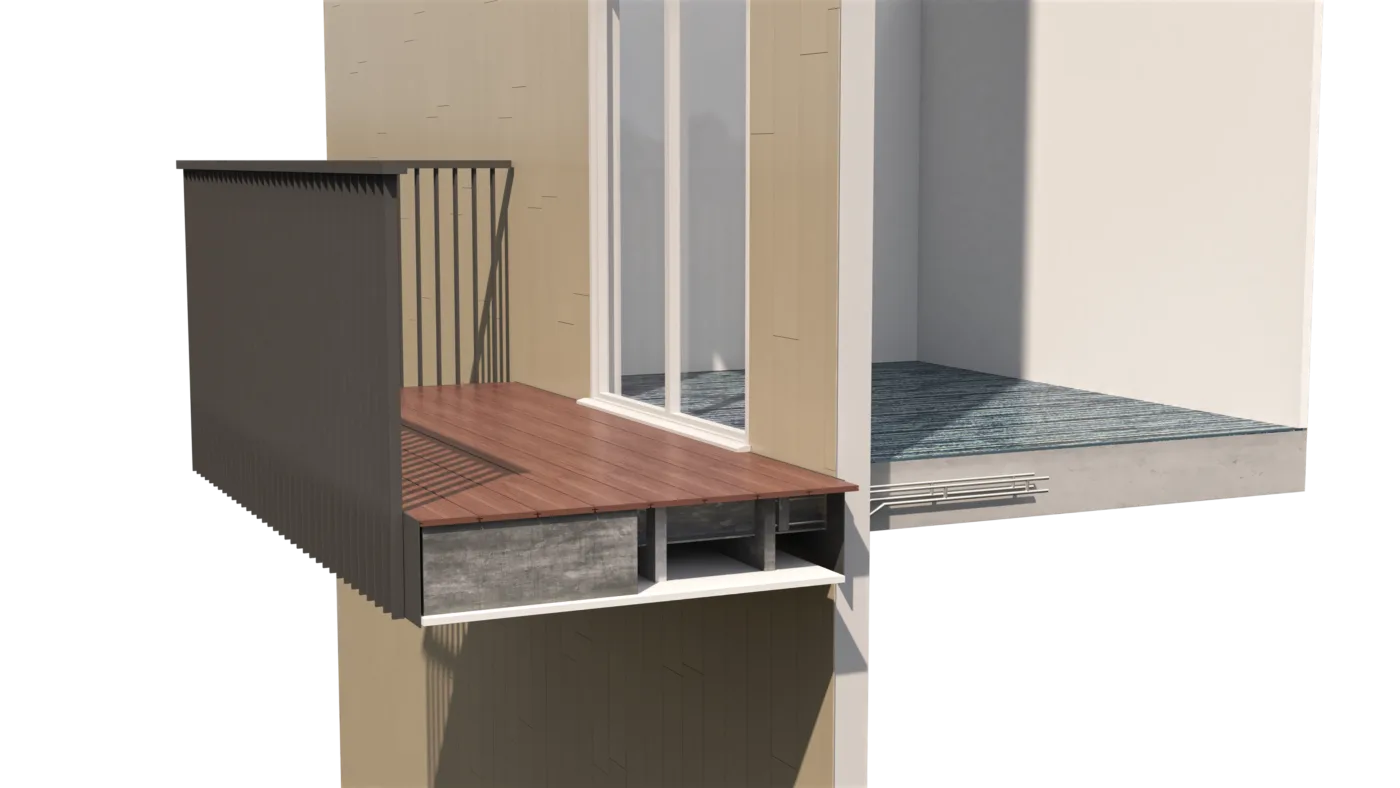
2. Will the Existing Steel Structure Still Work?
Many older residential balconies were designed around thick timber decking spanning relatively large distances. When that timber is replaced with a modern non-combustible solution, the structural assumptions often change.
Rather than forcing a replacement board to fit the existing arrangement, designers should first assess whether additional support is required.
Possible solutions include:
- Introducing mid-span supports or intermediate joists. Possible solutions include MyDek’s Joist Hanger and SpeedRail
- Using MyDek’s BoxRail to form a grid substructure
- Providing mid-span support where appropriate
These relatively small interventions can significantly improve structural performance while avoiding unnecessary alterations to the primary steelwork.
For contractors, identifying these requirements early avoids costly site changes once installation has begun.
3. Has the Structural Loading Been Checked?
Refurbishment doesn’t simply replace materials; it can change how the balcony performs structurally.
Additional dead loads from replacement decking, substructures or finishes need to be considered alongside the intended use of the balcony.
For example, balconies serving residential apartments may have different loading requirements from communal walkways or publicly accessible areas.
Just as importantly, every component should form part of a clear load path.
The Building Safety Regulator expects designers to demonstrate how loads transfer safely from the decking, through the support structure and into the primary frame.
Without a clearly defined load path, designers risk excessive movement, overstressed fixings and delays during technical approval.
4. Have You Allowed for Thermal Movement?
Thermal movement is one of the least visible but most important considerations during balcony refurbishment.
Steel, aluminium and mineral composite materials all expand and contract at different rates. Over time, these movements can place added stress on fixings, connections, interfaces and edge details.
Ignoring thermal movement doesn’t usually create problems immediately. Instead, it leads to issues years after completion, when repeated seasonal movement begins affecting long-term performance.
Incorporating suitable movement allowances and detailing helps to accommodate:
- Thermal expansion and contraction
- Structural deflection
- Long-term creep and settlement
- Material-specific movement characteristics
5. Is the Balcony Layout Working For or Against You?
Board orientation often gets treated as an aesthetic decision, but it also has a significant impact on installation efficiency, waste, support requirements and overall project cost.
Choosing whether boards run parallel or perpendicular to the building can influence:
- Material wastage
- Number of supporting rails
- Installation speed
- Corner detailing
- Future maintenance
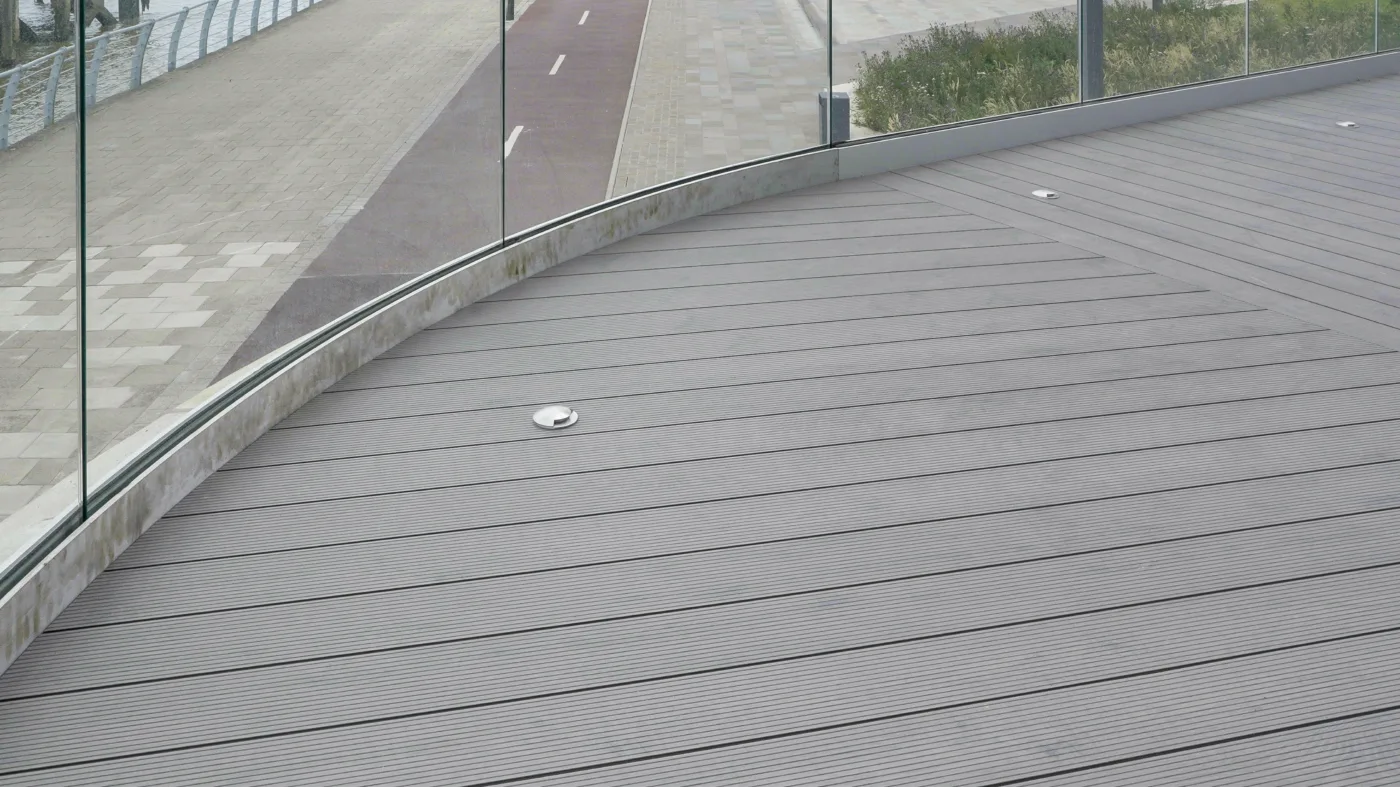
Awkward balcony shapes, curved façades and non-square buildings all benefit from careful layout planning before work reaches site. Simple design decisions at specification stage can remove hours of installation time later.
6. Where Will the Water Go?
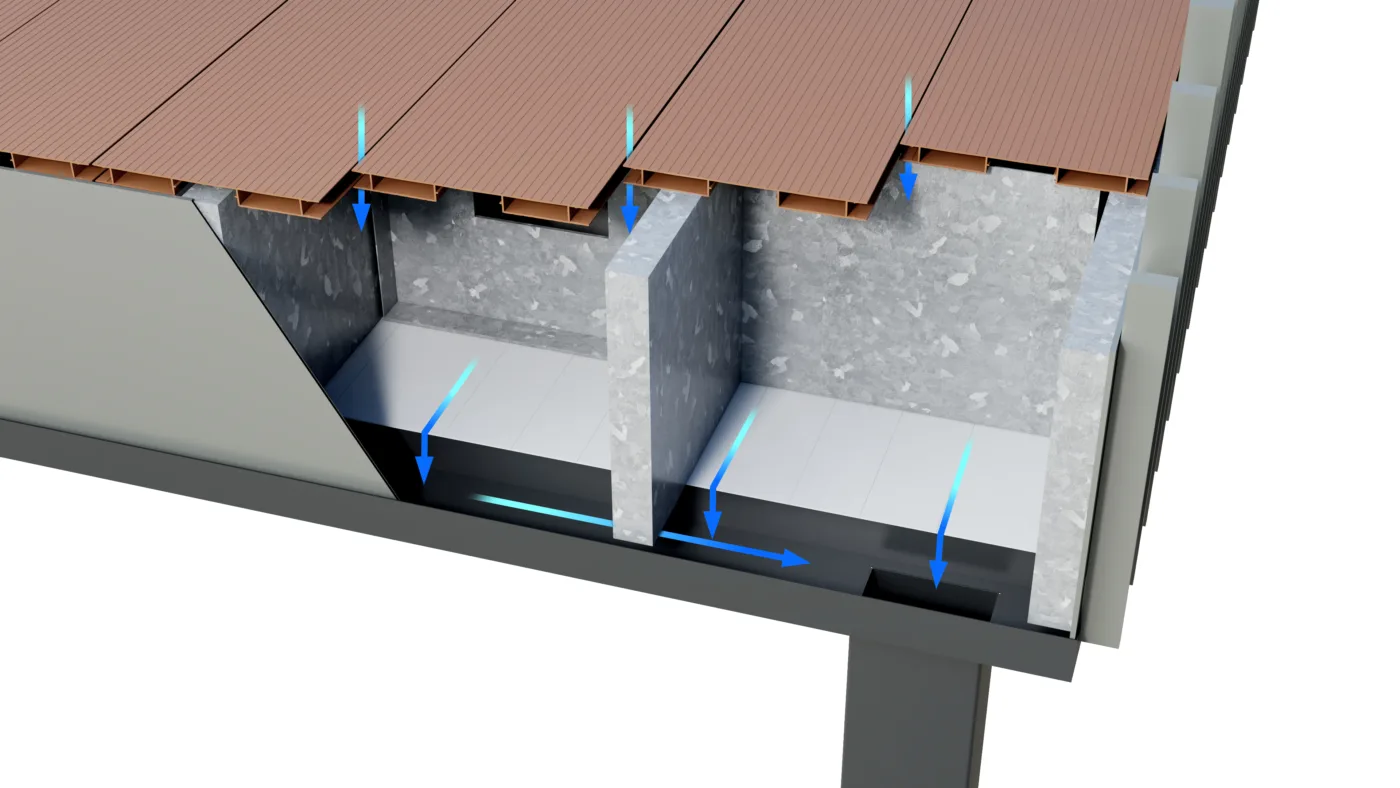
Water management is a common cause of long-term balcony problems. A refurbishment should never focus solely on replacing the deck surface while ignoring drainage.
Questions worth asking include:
- How will rainwater leave the balcony?
- Is controlled drainage required?
- Is there adequate separation below door thresholds?
- Will water fall onto balconies or public areas below?
- Are drainage gaps compliant?
Poor drainage doesn’t just affect the balcony itself – it can lead to water ingress, staining, deterioration and expensive future maintenance.
Designing drainage into the refurbishment from day one helps avoid those issues altogether.
Hidden Challenges That Often Get Missed
Beyond the obvious structural considerations, refurbishment projects frequently uncover less visible issues.
Galvanic Corrosion
Where different metals come into contact, particularly in coastal or exposed environments, galvanic corrosion can significantly reduce the lifespan of structural components.
Selecting compatible materials and detailing interfaces correctly is essential for long-term durability.
Cantilevered Balconies
Cantilevered balconies deserve particular attention during refurbishment.
Because the structure relies on a fixed connection at one end, any additional loads or changes to the build-up should be carefully assessed to ensure structural stability and acceptable deflection.
Existing Geometry
Older buildings are rarely perfectly square.
Corner balconies, unusual angles and inconsistent steelwork often require bespoke detailing rather than standard installation methods.
Recognising these challenges early prevents delays during installation.
Technical Support Makes the Difference
Every refurbishment project is unique, and the greatest value often comes from understanding how the selected products interact with an existing building.
Early technical engagement allows project teams to:
- Assess structural constraints
- Review existing spans
- Develop efficient deck layouts
- Resolve drainage challenges
- Produce compliant details
- Reduce installation risk
It also helps contractors avoid unexpected site modifications, giving developers greater confidence that refurbishment programmes will stay on schedule.
Refurbishment Is About More Than Replacing Decking
Today’s projects demand more than a like-for-like replacement – they require careful consideration of structure, drainage, compliance, installation and long-term performance.
By addressing these challenges early, project teams can reduce risk, minimise site issues and deliver balconies that meet modern safety standards without unnecessary compromise.
Whether you’re specifying a new system, managing a remediation programme or planning installation, early technical input can make the difference between a straightforward refurbishment and a costly redesign.
Need support with an upcoming steel balcony refurbishment?
MyDek’s technical team can review your existing balcony arrangement, advise on compliant refurbishment solutions and help develop project-specific details that simplify installation while helping you to meet building safety requirements. Get in touch with our team today to see how we can help you.