

When choosing decking for balconies and terraces, aluminium has traditionally been viewed as a dependable, cost-effective option. It is non-combustible, durable, lightweight and well suited to a wide range of applications – which is why aluminium decking remains an important part of the MyDek range. But there is another assumption that is worth challenging: that choosing aluminium will necessarily mean spending less.
Mineral composite decking such as Luxura is generally perceived as a premium product. Its A1 fire rating, natural timber appearance and high-performance characteristics can lead project teams to assume that it will carry a significant cost premium over aluminium. Increasingly, that isn’t necessarily the case.
Changes in aluminium prices have narrowed the difference between the two solutions, while Luxura has benefited from comparatively stable pricing. On a like-for-like system basis, Luxura can work out as the more cost-effective overall option, which raises an important question: if perceived cost is the main reason for choosing aluminium, is it still the right choice?
The challenge of specifying a commodity-based product
Aluminium is a globally traded commodity. Its price is influenced by a wide range of factors, from energy and raw material costs to global demand, exchange rates, tariffs, trade policy and geopolitical events. The energy prices can be a significant factor due to aluminium’s energy-intensive production processes. As a result, aluminium prices can move significantly over relatively short periods.
This matters because construction projects rarely move from specification to procurement overnight. On a major residential development, a decking system might be considered during early design, specified months later and not actually purchased until considerably further into the programme. The price environment at each of those stages can look very different.
An aluminium solution that appears particularly competitive when the original budget is prepared may therefore sit in a different position by the time orders need to be placed.
That doesn’t make aluminium a poor choice. There are many projects where its appearance and characteristics make it exactly the right material, but it does mean that today’s material price shouldn’t necessarily be treated as a guarantee of tomorrow’s project cost.
Price volatility isn’t just a procurement problem
Fluctuating material prices don’t just affect buyers. A decking system may be specified months before it is purchased, and if its cost changes significantly during that period, the original specification may no longer fit the project budget.
This can lead to value engineering, product substitutions and additional design work later in the programme. For architects and specifiers, greater price stability can therefore help protect specification integrity, providing more confidence that the solution selected during design will remain commercially viable when the project reaches site.
For buyers, the issue is budget certainty
For buyers, Quantity Surveyors and commercial managers, the issue is budget certainty. Comparing deck boards purely on today’s price per square metre doesn’t account for the cost of the complete decking system, including the required substructure.
A board that initially appears cheaper may become less competitive once the full system is considered. Substructure requirements, repricing, substitutions and associated design changes can all create additional costs of their own.
Is Luxura really more expensive than aluminium?
Luxura is a premium product. It has been developed to combine the visual qualities people associate with timber decking with the performance required for modern high-rise residential environments. Naturally, that can create an expectation of a premium price, but that is not necessarily the case.
As aluminium costs have changed, the gap between Luxura and aluminium decking has narrowed. When the required substructure is included, Luxura can work out as the more cost-effective option overall, while also offering comparatively stable pricing.
If an aluminium product is being selected primarily because it is expected to be considerably less expensive, it is worth checking whether that assumption still holds true for the project in question. Rather than asking “Which material is normally cheaper?”, a more useful question may be: “What do these two complete decking systems actually cost for this project today, including their required substructures, and what do we get for that money?”.
When the full system cost is comparable, performance matters much more
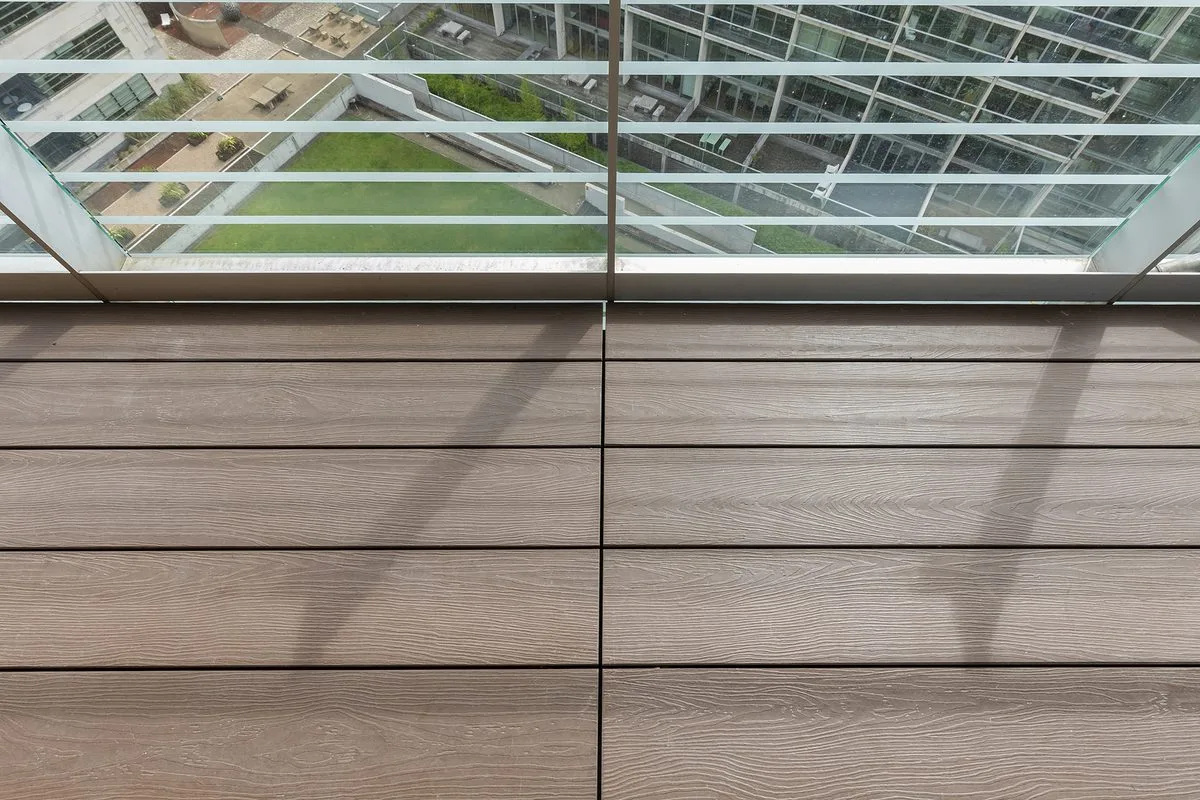
Once two products are sitting at a similar price point, the decision changes. Instead of one being the “premium” option and the other the “cost-effective” option, project teams can evaluate them more directly on the characteristics that matter to the building and its occupants. And this is where Luxura offers some significant advantages.
- Timber appearance without the combustibility
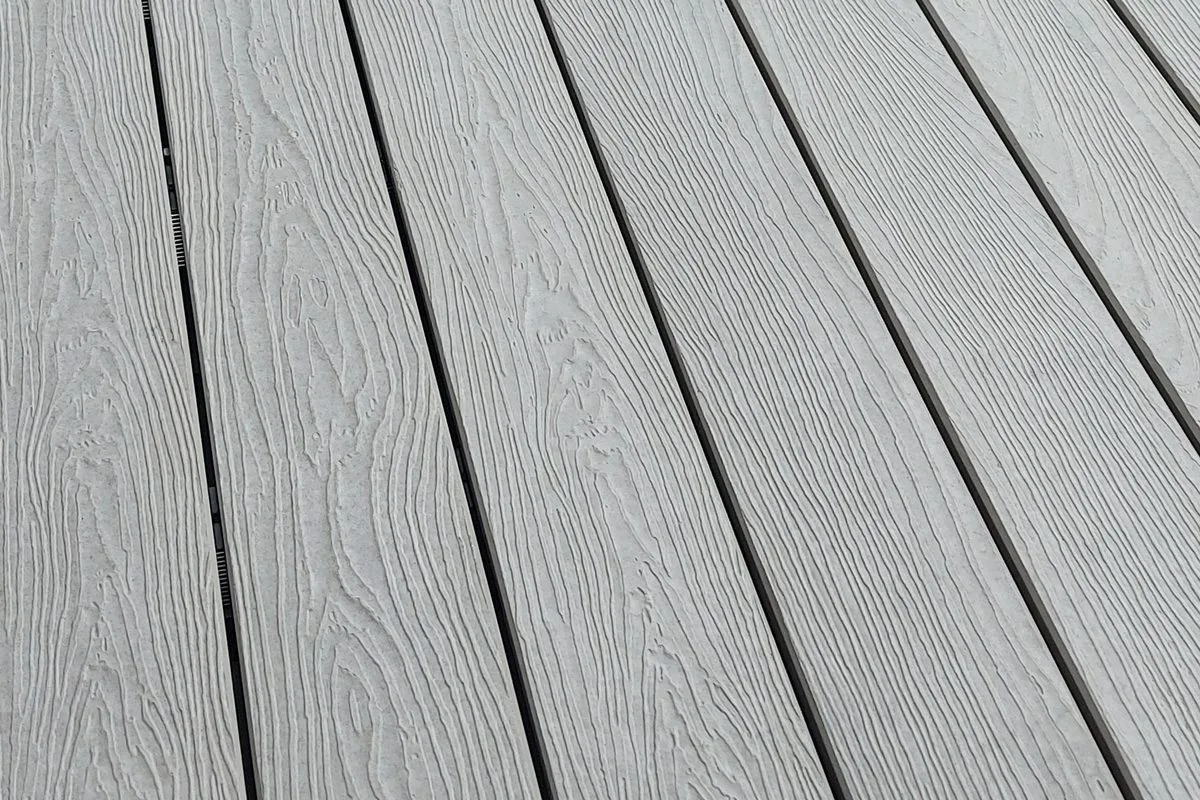
Aluminium provides a clean, contemporary finish, but it can be difficult to replicate the warmth and character of natural timber. Luxura combines a realistic timber appearance with an A1 reaction-to-fire classification, providing another option where both aesthetics and fire performance are priorities. - Proven superior performance
Both materials can deliver excellent performance when appropriately specified. Luxura has been extensively tested for the demands of balcony and terrace environments, including fire, slip and impact performance, giving specifiers confidence beyond aesthetics alone. - Quieter underfoot
Aluminium is a relatively resonant material and, depending on the system, installation and conditions, can generate more noticeable noise from footfall and other movements. Luxura provides a more solid, quieter feel underfoot, particularly valuable on residential balconies. - More comfortable in direct sunlight
Metal decking can become very hot when exposed to strong direct sunlight. Luxura’s mineral composite construction behaves differently, helping to provide a more comfortable temperature underfoot on exposed balconies and terraces. - Through-colour finish
Aluminium decking typically relies on a powder-coated surface to provide its colour and finish. Luxura is through-coloured, so its appearance isn’t dependent on a surface coating, an advantage where boards may be exposed to furniture and everyday wear.
Does that mean Luxura is always better than aluminium?
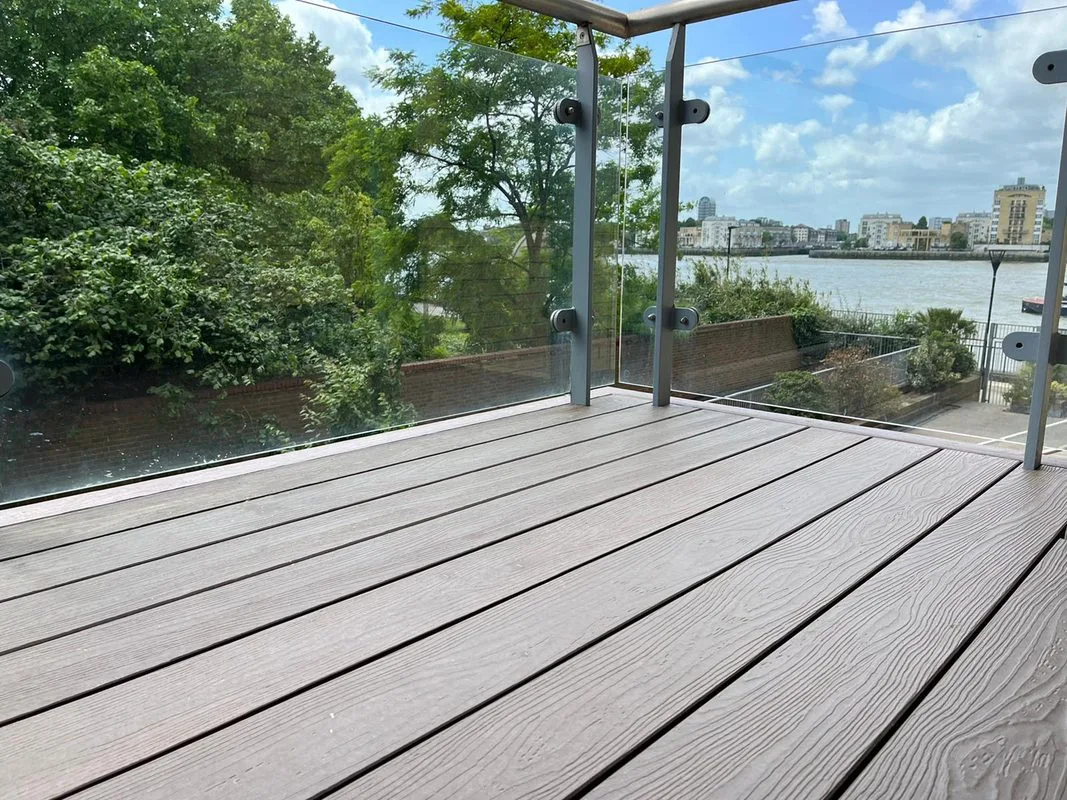
Not necessarily. MyDek supplies both mineral composite and aluminium decking because different projects have different requirements.
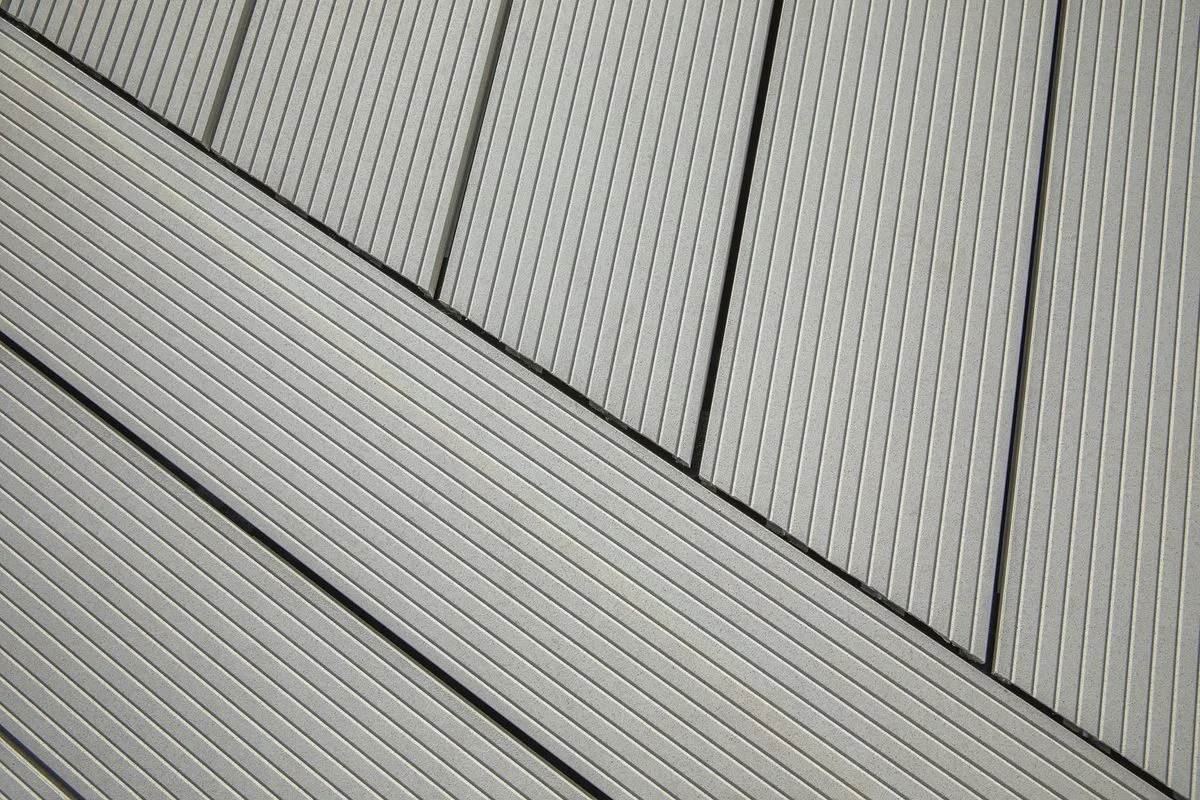
There are applications where aluminium is an excellent solution. Its low weight, durability, non-combustibility and ability to be manufactured in different profiles and colour options make it highly versatile.
The objective is to make sure that cost assumptions aren’t determining the specification before the products have actually been compared. If the principal reason for discounting Luxura is the assumption that it must be considerably more expensive, it is worth comparing the complete system cost, including substructure, before ruling it out.
Think beyond the £/m²
Construction budgets are under significant pressure and every product needs to demonstrate value. When evaluating balcony and terrace decking, project teams might consider:
- The current project-specific cost of the complete system, including decking boards and substructure
- How exposed that cost is to future material-price movements
- Fire performance
- Aesthetic requirements
- Slip and impact performance
- Durability and finish
- Support-system requirements and their cost implications
- The risk and implications of changing specification later in the programme
This creates a much more rounded comparison and reflects the reality that a specification has to work not just when the drawing is produced, but when the product is eventually purchased and installed.
Premium performance doesn’t have to mean a premium price
But the commercial relationship between Luxura and aluminium has changed. With aluminium prices subject to commodity-market movements, Luxura offering comparatively stable pricing, and the substructure included in the comparison, Luxura can be the more cost-effective overall solution. That makes it increasingly important to compare the products based on the requirements of the actual project, rather than assumptions about what each material ought to cost.
For architects, that can mean greater confidence that a premium specification remains commercially viable as the project progresses. For buyers and commercial teams, it can provide another route to balancing performance with greater cost predictability.
When the complete Luxura and aluminium systems are compared, the question is no longer simply ‘which board is cheaper?’ It becomes: ‘which solution gives this project the most value for the money we’re spending?
If cost has previously led you to rule out Luxura, speak to the MyDek team for a project-specific comparison. You may find that Luxura is the more cost-effective option overall.